
Arrowhead Plant Care (Indoor Syngonium Plants)
The Arrowhead plant (Syngonium podophyllum) is a fantastic houseplant that grows elegant arrowhead-shaped leaves and can survive in various indoor conditions.
To keep your plant thriving, provide bright, indirect light, maintain moderate humidity, and water when the top inch of soil feels dry. Fertilize regularly during the growing season for a lush, vibrant plant.

Need a plant care refresher? Check out my Beginners Guide to Houseplant Care.
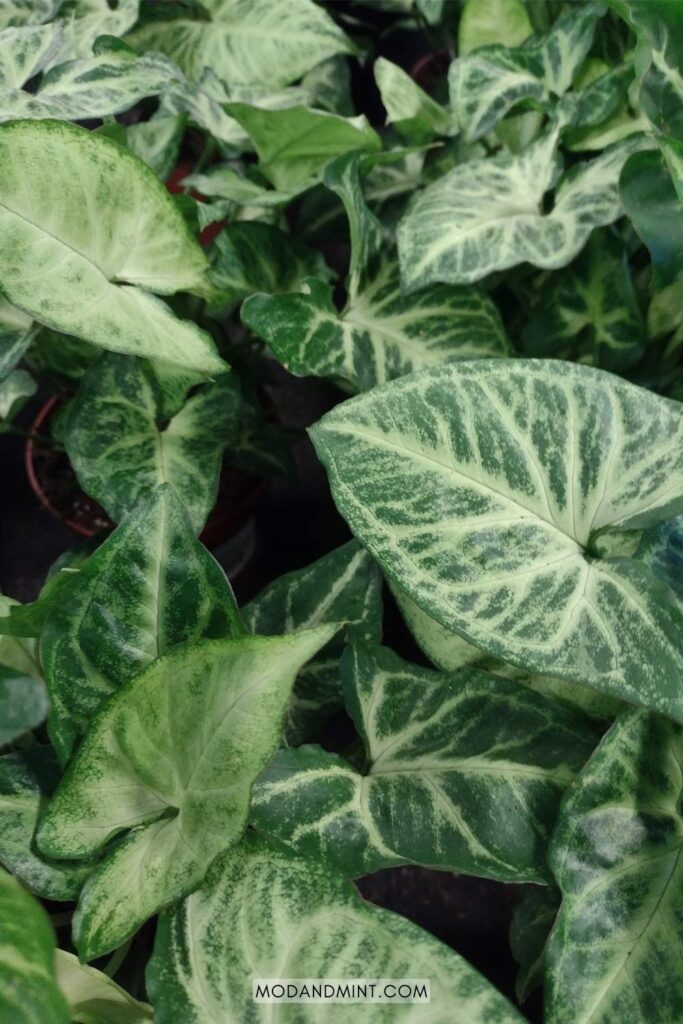
Arrowhead Plants
The Syngonium podophyllum is native to the tropical rainforests of Central and South America. There it grows as an understory plant, in the shaded areas beneath taller trees and plants.
There are more than 30 different species of arrowhead plants with different shades of pink, white, and green variegated leaves.
They grow long vines with aerial roots to help attach themselves to trees. Indoors, you can grow it as a hanging plant or support it with a trellis or moss pole. For step-by-step instructions, read my post on how to add a moss pole to your plant.
Want to add a Syngonium Arrowhead Plant to your collection? Find it for sale on Amazon!

Light Requirements
One of the most appealing aspects of the arrowhead plant is its easy light requirements. It can adapt to different light conditions. But as an indoor house plant, it will grow best in bright, indirect light.
In low light, it will grow slower and might grow leggy with leaves spaced further apart. If you want a more bushy-looking plant you will have to give it more light. Consider getting a LED grow light if your home doesn’t receive enough natural light.

Watering
Water your arrowhead plant regularly to keep the soil slightly moist. The soil should feel like a wrung-out sponge.
Check the soil frequently, When the soil feels moist, wait for one to two days and check again. If the soil is dry, go ahead and water generously, saturating the soil. Allow excess water to drain out of the bottom of the pot. Then allow the top layer of soil to dry out before watering again.
Overwatering can lead to yellow leaves and root rot, while underwatering can cause the leaves to dramatically droop, wilt, and dry out. Leaves should feel firm, not limp.
When in doubt, hold off on watering. It’s easier to fix underwatering than overwatering. If you are uncertain, use a moisture meter to help you with when to water.
In fall and winter, the plant goes dormant and growth slows down. It will need less water. Wait until the surface of the soil is dry, but make sure to not let the soil dry out completely.
Read More: Indoor plant watering tips and techniques.

Fertilizing
Begin a regular fertilizing schedule in early spring. Feed it with diluted liquid fertilizer once a month throughout the growing season. You can also treat it to a specially formulated Aroid plant fertilizer.
Over-fertilization can be more harmful than under-fertilization. If you notice signs of nutrient burn, such as yellowing or browning leaf tips, cut back on the fertilizer.
Be sure the soil is damp before fertilizing and don’t fertilize in winter when growth slows down. Also never fertilize if your plant is recently repotted or is having problems. Fertilizer gives your plant a nutrient boost when it is actively growing, it is not plant medicine.

Humidity
Syngonium likes warm temperatures and high humidity. Brown, crispy leaf tips are often a sign that your plant needs more humidity.
A good place for your plant is in a bathroom or kitchen with a bright window. The steam from the shower or cooking will provide your plant with the humidity it loves. If that is not possible, the best way to raise the humidity is to place a small humidifier near your plant.

Arrowhead Plant Propagation
If your plant has grown very large you can prune off the top and propagate it. You can also take stem cuttings, as long as there is a leaf node.
Propagation can be done any time of year but is best done in spring, or early summer when your plant is actively growing.
Propagate Cuttings in Water
Water propagation is an easy way to make more plants.
Always use sharp and clean pruning shears. Take a cutting, making sure it has at least one leaf node. Place the cutting in a small bottle of water.
Keep the cutting in bright, indirect light. Make sure to change the water regularly and with some patience, roots will appear. Wait until the roots are about two inches long before you pot them up.
Propagate Cuttings in Soil
You can choose to skip the water rooting part and plant your cuttings in soil right away.
To speed up the process, use a rooting hormone powder on your cuttings. Dip the bottom 1/4 inch of your cutting in water, then dip it in the rooting powder. Plant it in a small pot with slightly moist, well-draining soil. Place in bright, indirect light, water sparingly, and wait for new growth to appear. At that point, resume regular care.
Propagation by Division
Another way to propagate a large plant is to divide the rootball and repot in smaller pots. Turn one plant into two! Or three! It is quick and easy.
Take the plant out of its pot and gently separate the roots and foliage. Be gentle to damage as few roots as possible. Pot each new plant in its own planter. Hold off on watering for a day or two, give the roots a little time to recover. They might look a little sad at first, but that is usually just the stress showing from being pulled apart. Don’t keep giving extra water to try to perk the plants up! Chances are you will overwater it.
Keep them in bright indirect light and wait until they are settled in their new homes and you start to see new growth appearing. Resume regular care at that point.
Read More: 6 Ways to propagate indoor plants.

Yellow Leaves
Yellow leaves are most often because the plant has been overwatered. Start by checking the soil, is it soggy? Think about when you last watered your plant. And how long before that?
Did you give the soil some time between watering to dry out a bit? Does your pot have a drainage hole on the bottom? If not, excess water has no way to get out and can drown the roots.
Pale, yellow leaves can also occur when your plant is getting too much direct sunlight. If the plant is too close to a window, it can be chlorophyll loss turning the leaves yellow. To fix this, just move your plant further away from the window.
Yellow leaves could also be due to over- or under-fertilizing. Too much fertilizer can burn the roots and make the leaves go yellow. Not enough fertilizer can cause iron or nitrogen deficiencies which also cause yellowing leaves.

Are Arrowhead Plants Toxic to Cats?
Unfortunately, Syngonium plants are considered mildly toxic when ingested. The sap might cause an allergic reaction and in some cases swelling and pain.
Although it is very rare for pets to get seriously hurt from eating plants, keep this one out of reach of children and pets.
Read More: Educate yourself on toxic plants and keep your cat safe.



Id like infomation on how to care for my phonopsis an make them bloom..